Pebblecrete Surface Restoration
Pebblecrete Pool Repairs Gold Coast
Improve worn and uncomfortable pool surfaces. Get a Free Estimate
Pebblecrete Surface Restoration
Improve worn and uncomfortable pool surfaces. Get a Free Estimate
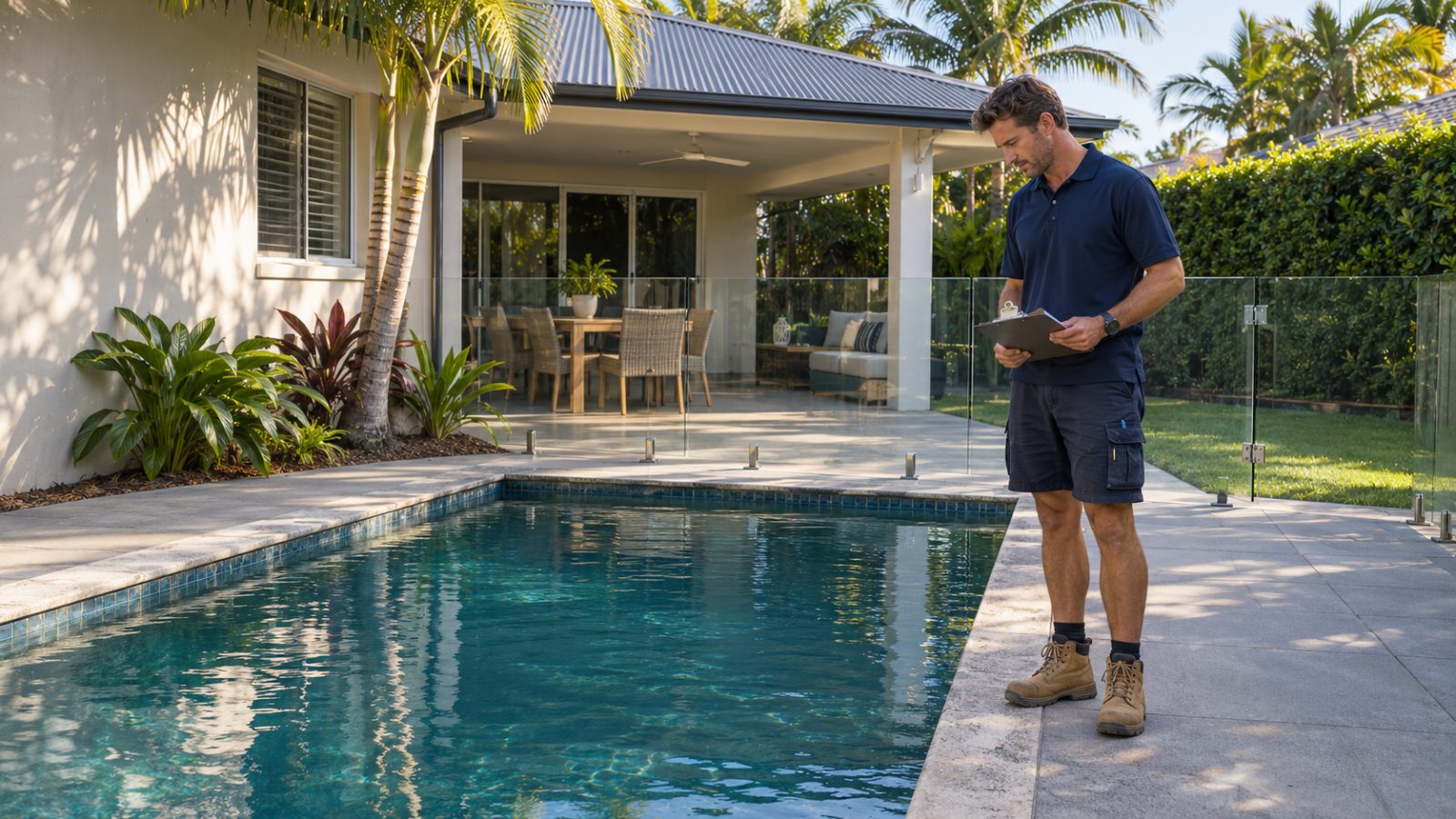
Pebblecrete is a familiar finish in many Gold Coast swimming pools. It offers a textured appearance, but ageing, chemical exposure, poor past repairs and general surface deterioration can leave areas rough, patchy or uncomfortable. You might notice loose stones, exposed aggregate, hollow-sounding sections or patches where the original finish has worn away. Some damage is limited to one area, while other pools show wider deterioration. Pool Repairs Gold Coast assesses the condition of existing pebblecrete and explains whether localised repairs or a larger restoration is the more suitable option.
Patching a pebblecrete pool takes care because the existing finish may have aged in colour and texture. Even when a repair is sound, a new patch may remain visible beside the original material. We aim to make these practical limitations clear before work begins. We also check whether the damage is limited to the surface or associated with cracking, moisture movement or failure of the underlying material. The goal is a practical repair that suits the condition of the pool rather than a quick cosmetic cover-up.
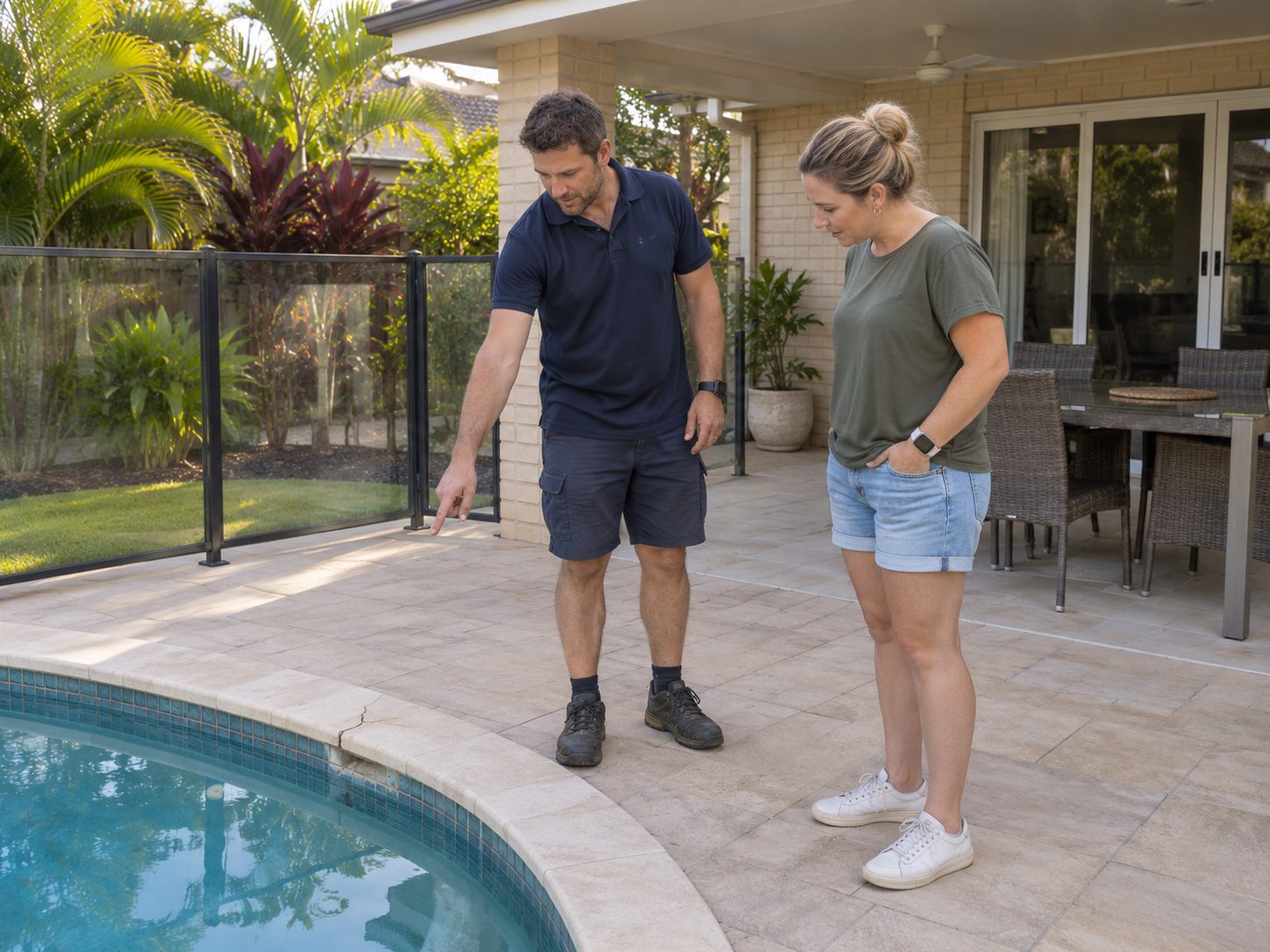
Pebblecrete deterioration can develop gradually. A small rough patch may expand, loose aggregate may collect on the pool floor, or an old repair may start separating from the surrounding finish. The cause and extent of the problem influence whether targeted patching is worthwhile. Before recommending work, we assess the bond of the existing material and the condition of adjacent areas. Suitable repairs generally require the removal of loose or unsound sections, thorough preparation and the use of compatible repair materials. Surface appearance, texture, curing and water chemistry are also important considerations. If substantial areas are failing, repeated patching may provide poor value compared with resurfacing.
Rough areas can make pool steps, seats and floors uncomfortable. We assess whether the texture has changed because of exposed aggregate, coating loss or another issue. Depending on the condition, suitable local treatment or patching may be considered. We avoid aggressive methods that could further damage an already weakened finish.
Small stones coming away from the finish may indicate deterioration of the binder or poor adhesion. We inspect the affected area and surrounding material before deciding how much needs to be removed. A sound repair requires a stable base rather than simply pressing new aggregate over loose material.
A hollow sound can suggest that the surface layer has separated from the substrate. The full extent may be larger than the section visible from above. We investigate the affected area and explain whether local removal and replacement is likely to be practical or whether more extensive work is needed.
Steps, benches and shallow areas receive frequent contact and can make surface defects especially noticeable. Repairs need to consider comfort, consistent texture, secure bonding and the shape of the existing finish. We also look for adjacent cracks or loose sections before repairing the most visible damage.
Matching aggregate size, colour and texture is an important part of planning. Older pebblecrete may be faded, stained or made from materials no longer readily available. We discuss likely differences between new and old surfaces so you can choose between a local patch and a broader finish upgrade.
| Service | Estimated Cost | Average |
|---|---|---|
| Small localised patch | Quoted after inspection | Varies |
| Multiple damaged areas | Area and preparation dependent | Varies |
| Delaminated surface removal | Quoted to confirmed scope | Project dependent |
| Extensive surface restoration | Individual project estimate | Project dependent |
The extent of loose material, matching requirements, access and surface preparation influence cost. Prices are confirmed through a project-specific estimate rather than an assumed average.
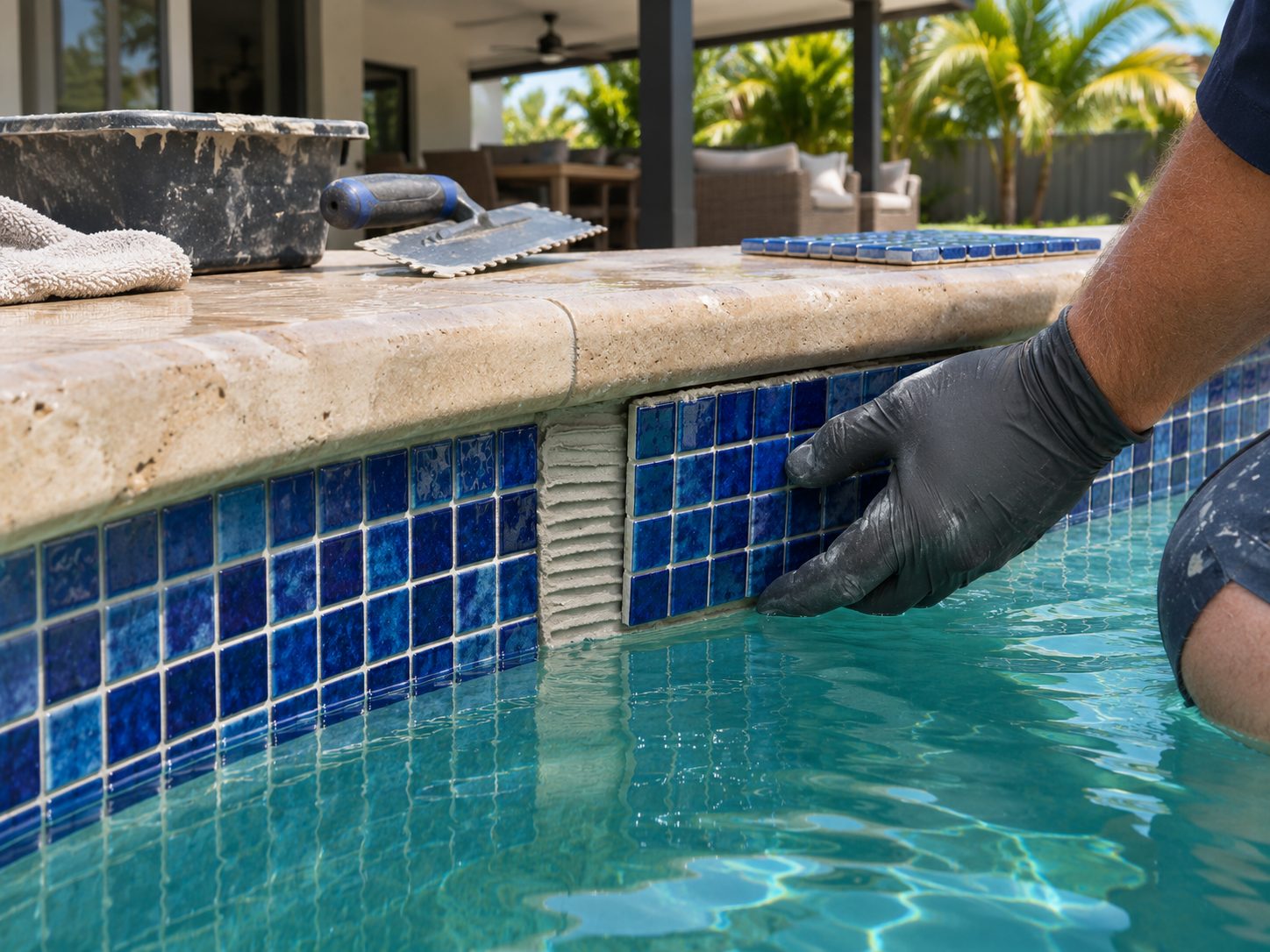
We check whether the surrounding finish is sound before recommending patching.
We consider comfort and the appearance of the repaired surface, especially on steps and areas people touch regularly.
We explain when a repair may remain visible because the existing finish has aged or suitable matching materials are unavailable.
If your pebblecrete pool is rough, patchy or shedding stones, call (07) 5610 2737 to discuss repair options.
Free — no obligations
We inspect the location, extent and condition of the pebblecrete and identify any signs of wider failure or underlying cracking.
We explain whether local patching is likely to be worthwhile or whether a broader restoration would make more sense.
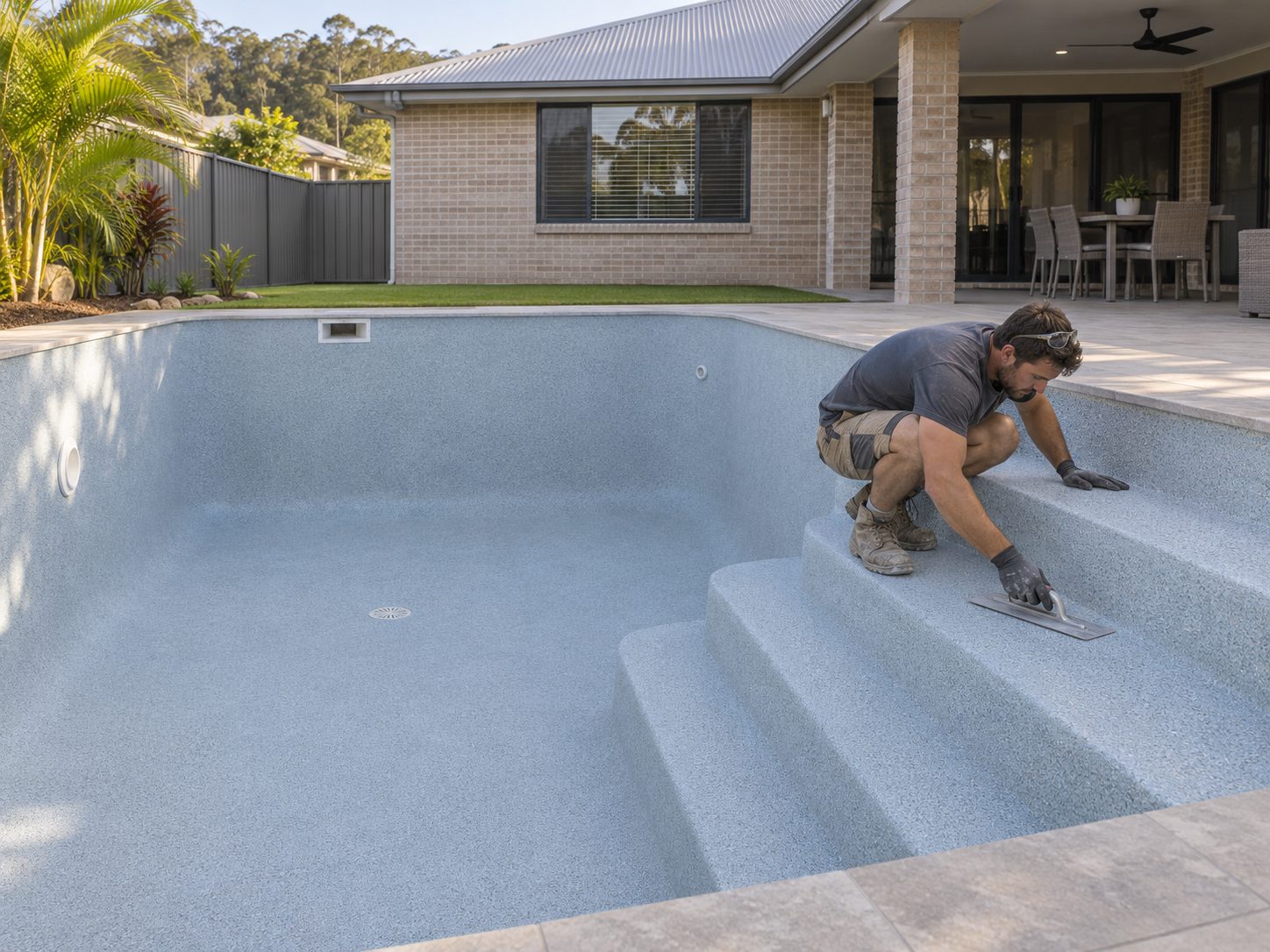
Loose material is removed where required, the base is prepared and suitable materials are applied according to the agreed scope.
We review the repaired texture and explain curing, refilling and maintenance considerations before normal use resumes.